

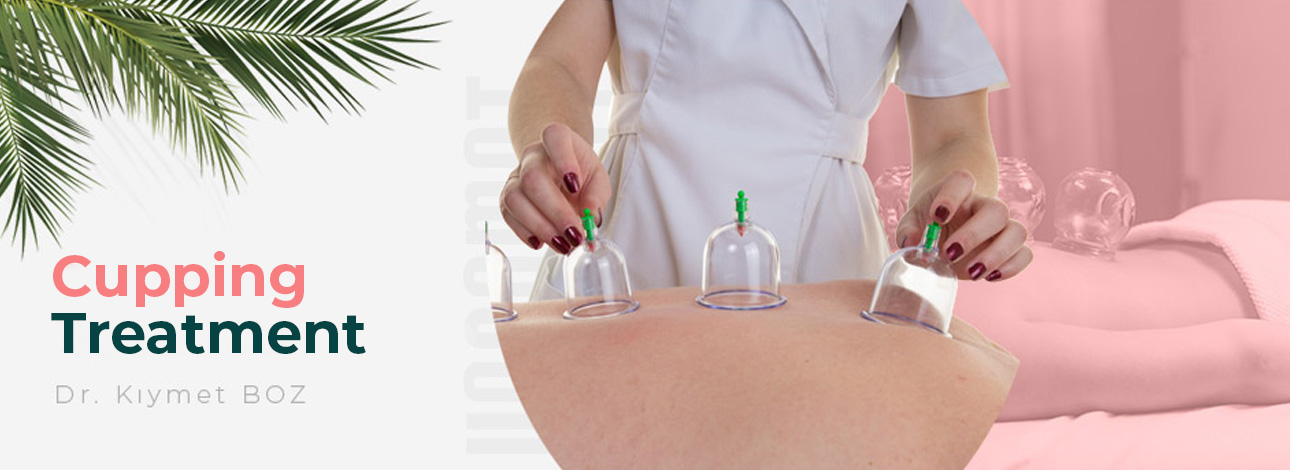
Cupping Treatment
Hacamat is a word that means “to suck” in Arabic. Cupping treatment, on the other hand, is an alternative medicine application applied to clean the bad blood in the body. The practice, which is one of the traditional alternative medicine techniques in Turkey, is also common in Asia, Africa and the Middle East. It is important that cupping is applied in hospitals or clinics in order not to cause various complications. Healthcare professionals who are experts in the field of physiotherapy can perform cupping treatment under appropriate conditions.
In the application, also known as cupping therapy, it is aimed to remove the dirty blood from the human body. Cupping performed on certain points in the body is done locally with vacuum or cannula. Cupping treatment, which has also attracted attention in western countries such as England, has attracted serious attention in recent years. According to some studies, cupping therapy has been found to be effective against migraine, rheumatism and back pain. On the other hand, it has been revealed in clinical studies that cupping has positive effects on type 2 diabetes and endocrine diseases.
What is Cupping (Cupping Therapy)?
Cupping treatment, whose origin dates back thousands of years, attracts attention as an alternative and complementary type of treatment. The answer to what is cupping (cupping therapy) is to ensure that the dirty, that is, toxic substance in the blood is expelled. In order to absorb the dirty blood accumulated under the skin, cupping is applied locally. After the designated areas of the body are covered with a cup, the amount of blood in the corresponding area increases. After the cups are withdrawn, very small incisions are made. In cupping, the areas from which blood will be taken and the incision will be made may vary from person to person. If there is an existing disease, this is taken into account. After the incision is made, vacuuming takes place and blood with a toxic substance content is discarded.
In cupping application, the back area is generally preferred. However, specialist doctors can decide where cupping will be applied. Acupuncture points are preferred in the treatment of cupping. Cupping treatment is also applied to the neck, head, back, knee-leg and shoulder area of the body. In cupping, which is important to be done in sterile environments such as hospitals and medical centers, it is also important that the incisions are made in accordance with the standards and that no scars are left. Doctors who are experts in their fields can apply cupping professionally.
Although the treatment dates back thousands of years and has been applied in many countries around the world, research is still ongoing. It is proven by scientific research that removing dirty blood from the body is good for many diseases. Some of the diseases in which there are clinical findings that cupping is effective are as follows:
- Diseases of the musculoskeletal system
- Obesity
- Inflammation and edema in the body
- Fibromyalgia
- Blood pressure
- Diseases of the immune system
Correctly applied cupping treatment is beneficial against many diseases in addition to the above diseases. If you are sensitive about what to consider after cupping, good results can be obtained.
What Does Cupping Do?
Among alternative medicine treatments, cupping, which is quite common today, has wide advantages. On the body, the removal of highly toxic polluted blood creates multifaceted effects. In response to the question of what does cupping therapy do, there are many different answers. In the first place, there is an improvement in blood circulation and a stronger immunity. Apart from that, the answers to the question of what does cupping do are as follows:
- It is effective against low back and joint pain that occurs after calcification in the body
- It is effective against psychological diseases
- In addition to anemia, it is effective against infections of internal organs
- It allows the body’s blood circulation to be faster
- It increases the body’s resistance and resolves edema
Scientific research on cupping continues. Because of this, new information about treatment emerges every day.
How is Cupping Done?
Cupping treatment is known as the process of taking blood from the body. However, the application is more extensive and involves delicate treatments on the skin. In order to treat various diseases or to protect the health of the body, cupping and vacuum and then taking blood from the relevant parts of the body with an incision include the steps of taking blood. The process of cupping takes an average of 30 minutes, but this varies according to the places to be treated. The treatment steps are as follows:
The area where cupping will be performed is wiped with a special antiseptic solution. Then the prepared mugs are placed on the site.
The cups are kept for one to five minutes, as long as the physician deems appropriate, and then dismantled.
After the cup is pulled, a scratch is made with the help of a very fine-tipped scalpel in the area where the blood collects.
On scratches with a depth of 1 millimeter and less, mugs are placed again.
The trophy is removed after the accumulation of blood. The region is cleared and the process ends.
The cupping procedure applied in areas such as the back, arms or legs is not painful. Therefore, anesthesia is not performed. There is no need to rest after cupping. Among the other topics that are curious about cupping treatment, there are questions such as “how many months is it done” or “what not to do after cupping”.
How many months is it done?
Cupping treatment is preferred both as an adjunct treatment in the treatment of certain diseases and to improve general health status. If you say how many months I should have cupping, specialist doctors can decide. Some patients prefer to have cupping once a month or more. Cupping therapy is taken several times a year by some patients.
Is cupping done during menstruation?
The answer to the question of whether cupping is done while menstruating is also a matter of curiosity. During menstruation, sensitivity increases in women. Since cupping is a procedure that affects blood circulation, negative effects may occur. However, in some women, cupping treatment during menstruation may not cause sensitivity. Therefore, it is important to get the opinion of a specialist physician.
Who cannot undergo cupping?
Traditional medicine practices have been practiced in different societies for thousands of years. However, serious complications do not usually occur in alternative medicine practices. However, for some people, it is important not to have cupping done or to get a doctor’s opinion. People for whom cupping is not suitable can be listed as follows:
- Autoimmune patients
- Patients with respiratory problems
- Patients with anemia and especially patients with low hemoglobin value
- Women during menstruation, pregnancy and lactation
- Patients with blood clotting disorders
- Patients with an INR value above 2
- Heart and kidney failure patients
- Cancer patients
- Children under 2 years of age and people over 70 years of age
What are the Benefits of Cupping?
Removing dirty blood that accumulates in the body over time has many benefits. Applications to cupping points have proven to have many benefits. In general, arms and legs, head area, back, shoulder and nape are at the forefront of cupping. In some cases, cupping is also applied to the face area. The benefits of cupping, which helps to maintain the body’s hormone balance, do not end with counting. The benefits of cupping (cupping therapy) are as follows:
- It is an auxiliary application in the treatment of chronic diseases
- It reduces neck and lumbar hernia pain
- It strengthens the body’s immune system and makes it more resistant
- It ensures the removal of harmful toxic substances from the body
- It provides the removal of edema with its detox effect
- Increases the amount of oxygen in the blood, regulates flow
- It helps in the treatment of problems such as migraine and headache
- It helps in the treatment of problems such as insomnia and forgetfulness
Cupping is one of the alternative medicine practices that contains significant benefits in many parts of the body. Among the diseases in which cupping is effective, there are the following diseases:
- Diseases of the musculoskeletal system
- Obesity and diabetes (diabetes) diseases
- High blood pressure
- Migraine
- Fibromyalgia
- Diseases associated with the digestive system
- Chronic fatigue
Scientific data on the benefits of cupping is limited, even if there are clinical findings. Therefore, if you are considering cupping therapy for the treatment of any disease, the first step should definitely be a doctor’s opinion. Even if cupping has benefits, the specialist doctor should recommend the most appropriate treatment steps for certain diseases.
Things to Consider Before Cupping
In order for the cupping process to be done in a healthy way, it is important to pay attention to some issues beforehand. It is imperative to be meticulous about both the decision on the cupping and the way the procedure is performed. Things to consider before cupping are as follows:
Find a professional health institution: Cupping should be done by health professionals who are trained in the field.
Evaluation: Before cupping, be examined by a specialist doctor. Doctors can give you an opinion on whether you are suitable for cupping. Cupping is never recommended for people with certain diseases.
Sterile environment: It is important that the environment in which cupping will be performed is sterile. On the other hand, it is important that the cup, cannula and incision materials used in cupping are hygienic as they come into contact with the body. Cupping should include sterilized and disposable materials.
Nutrition: You should pay attention to your diet before cupping. Generally, it is recommended that the feeding be light before cupping treatment. In addition, your water consumption should be at an ideal level.
Painkillers: Before cupping, you can use painkillers to relieve possible mild pain and relax.
In addition to the above substances, it is not recommended to consume foods that raise sugar. On the other hand, before cupping, a sexual abstinence of at least 24 hours is also recommended.
Things to Consider After Cupping
After cupping treatment, it is necessary to be meticulous about many issues as well as the cleaning of the application area. The answers to the question of what to pay attention to after cupping are as follows:
Pay attention to cleanliness: After cupping, it is important to keep the cupping treatment area clean and hygienic. When you do not pay attention to hygiene, there may be a risk of infection. To protect the cupping area, you can use a sterilized bandage.
Stay away from contact with water: After cupping, you should avoid contact of the area with water. During the healing process of wounds, make sure that contact is minimal, especially when bathing.
Use the medicines recommended by the doctors: In case of pain and swelling in the area after cupping, you can use the medicines recommended by specialist doctors. Apart from painkillers, anti-inflammatory drugs are also preferred.
Rest: Limiting physical activities and resting after cupping treatment accelerates the healing process.
Nutrition: After cupping treatment, it is important to eat a healthy diet and consume enough water to recover quickly.
The healing process after cupping may be different for everyone. In case of sudden reactions or infection, you should go to the doctor as soon as possible. Periodic check-ups are important for monitoring the general health status.
Cupping Price
The price of cupping, which has many health benefits, varies according to different factors. The most important criterion in cupping prices is the professional structure of the place where you receive the service. Although cupping is an alternative medicine technique, it is a service that you can also get from experts in hospitals and health centers. However, people who have not received health training, but who have received a certificate by receiving cupping training, also provide this service. Generally, it is important to choose professional health centers, although people who perform individual cupping treatment offer more affordable cupping prices.
The important factors regarding the price of cupping are as follows:
Region: Cupping prices may be different in big cities such as Istanbul, Ankara, Izmir or Bursa compared to other cities.
Expertise: The experience of the healthcare professionals who will perform cupping treatment affects the prices.
Type of application: Cupping treatment can be applied to many areas such as waist, neck, shoulder, leg, arm. Depending on the scope of cupping, its prices will be different.
Frequency of treatment: Another factor for cupping prices is the number of cuppings. Depending on how many cuppings you will have on a monthly or annual basis, you can get different prices.
You can get the best information for the price of cupping by contacting health centers. After the doctor’s opinion, you can get information about the prices according to how and how often you will receive a cupping (cupping) treatment.

Dr. Kıymet BOZ
Dr. Kıymet BOZ özellikle dudak dolgusu, mezoterapi, leke tedavisi, bölgesel zayıflama, bağışık sistemi güçlendirme ve cilt bakımı ile ilgilenmektedir.